Visit your dealer below for purchase.
Your delivery zip code: 43215
Change

Modern Jacuzzi hot tubs are engineered for efficiency from the ground up. With the right habits and features working together, many hot tub owners discover they can often save $15–$50 per month on electricity—without sacrificing a single moment of relaxation.
There are a variety of hot tub models on the market designed specifically for energy efficiency. This article will help you understand how to compare these options and choose the best fit for your needs.
A hot tub uses power primarily in two ways: heating the water to your desired temperature and running the pump for circulation and filtration. The heater typically accounts for the majority of energy consumption, while circulation pumps contribute a smaller but steady draw throughout the day.
Here’s a practical way to estimate your monthly operating costs:
Both individual hot tub owners and companies should monitor operational costs and efficiency to maximize hot tub energy savings.
Several key variables influence your actual energy costs:
Most modern hot tubs from premium manufacturers use significantly less energy than older models or budget alternatives because of better insulation, improved cover designs, optimized plumbing layouts, and more efficient components.
The single most important long-term energy decision happens before you ever fill the tub with water. The construction, insulation, and components you choose lock in your baseline energy use for 10–15 years or more.
The difference between spa types is substantial:
When evaluating energy efficient hot tubs, look for these design features:
The Jacuzzi J-™ and J-300™ Collections, along with the J-5™ Collection, and select Jacuzzi® Swim Spa models, are engineered to meet or exceed common energy standards in both North America and Europe. Independent testing through the California Energy Commission confirms that Jacuzzi hot tubs average 22% greater efficiency than CEC standards. Hydropool's self-cleaning models, including the Self-Cleaning 670 and 695, are designed to reduce energy usage significantly through advanced insulation and energy-efficient pumps.
When speaking with dealers, ask for estimated kWh/month figures for your climate and the specific models you’re considering. Compare those projections to your local electricity rates to calculate annual operating costs—and the potential savings versus older or budget spas.
When wellness becomes effortless, it starts with the heart of your spa—the heating system. The difference between ordinary and extraordinary relaxation often lies in technology you never see, working silently to create the perfect sanctuary. Advanced heating innovations don't just warm water; they transform your entire spa experience into something beautifully seamless.
Enter the air source heat pump—a masterpiece of purposeful innovation. While traditional heaters simply convert electricity to warmth, these sophisticated systems draw ambient energy from the air around you, transferring nature's own heat into your personal oasis. This isn't just efficiency; it's intelligent design that cuts energy consumption by half, allowing you to indulge in restorative moments without compromise. Your sanctuary maintains its perfect embrace while your energy bills reflect the wisdom of choosing innovation with meaning.
True spa selection goes beyond the surface—it's about understanding what creates lasting comfort. The heating system deserves as much attention as the shell that cradles you, because effortless luxury begins with technology that simply works. An advanced heating system doesn't just maintain temperature; it creates consistency that lets you sink into relaxation the moment you're ready, every time you're ready.
Choosing cutting-edge heating technology like an air source heat pump means investing in more than efficiency—you're choosing a lifestyle where wellness feels effortless. Whether this is your first step into spa ownership or an elevation of your current experience, prioritizing heating innovation ensures every moment in your sanctuary feels exactly as it should: perfectly, simply, yours.
Every degree counts. Lowering your set temperature and avoiding large swings can reduce heating costs significantly while keeping your spa perfectly comfortable for hydrotherapy.
For most users, a water temperature range of 100°F–102°F provides an ideal balance of comfort and efficiency. The upper safety limit of 104°F is appropriate for shorter sessions, while athletes or those in warm climates often prefer slightly cooler settings around 98°F–100°F.
The numbers tell a compelling story:
Here’s a counterintuitive truth that many hot tub owners discover: maintaining a steady temperature uses less energy than constant adjustments. Reheating from cold (say, 60°F back to 102°F) demands more power than simply maintaining heat in a well-insulated Jacuzzi spa.
Seasonal and vacation strategies:
Heat loss happens primarily in two directions: upward through the water surface, and sideways through the cabinet and plumbing. Addressing both pathways is critical for maximizing energy savings.
How full foam insulation works:
Modern Jacuzzi hot tubs feature full foam insulation that surrounds both the plumbing and the shell. This comprehensive approach traps heat effectively, reduces heater run time, and protects components during colder months. The difference compared to thin, perimeter-only insulation found in budget spas is substantial—think of it as the difference between a well-insulated home and one with gaps around every window.
What makes an efficient cover:
When to replace your cover:
Watch for these warning signs that your cover is costing you money:
Replacing an old, waterlogged cover with a quality replacement often delivers one of the fastest returns on investment for hot tub energy savings. Many owners report a 15–25% reduction in monthly operating costs after this single upgrade.
Wind and shelter considerations:
Clear, balanced hot tub water and clean filters allow pumps and heaters to work at peak efficiency. When water quality suffers, your equipment works harder—using more energy and wearing out faster.
A practical maintenance rhythm:
Clogged or deteriorated filters restrict water flow, forcing pumps to work longer at higher loads. This increases energy consumption and can overheat motors over time. Severely dirty filters can reduce efficiency by 5–10% or more.
Advanced water care systems:
Jacuzzi offers CLEARRAY® Active Oxygen™ technology, which helps maintain clearer water for longer periods. This reduces the need for frequent drain and refill cycles—and every time you avoid draining and refilling, you save the significant amount of energy required to heat 400+ gallons of cold water back to temperature.
Drain and refill guidance:
Follow Jacuzzi-approved chemical recommendations and your owner’s manual for the best balance of water quality and efficiency.
Modern Jacuzzi control systems include energy-saving features that many owners never fully explore. Understanding these options puts you in control of your operating costs.
Understanding operating modes:
Choose your mode based on your actual usage pattern. Daily users typically benefit from standard mode, while weekend-only users might save money with economy mode during the week.
Optimizing filter cycles:
Jet and air control best practices:
Optional energy-saving accessories:
Sometimes the most economical path forward is a new hot tub. No amount of optimization can make certain older or basic spas as efficient as a modern, fully insulated Jacuzzi model.
Signs that upgrading makes financial sense:

The numbers in perspective:
Consider this comparison for a cold-climate homeowner:
Upgrading to a modern, efficient Jacuzzi swim spa can lead to significant energy savings compared with older, poorly insulated models. An 8-person older spa typically consumes 400–600 kWh per month, costing $72–$108, or $864–$1,296 annually at $0.18 per kWh. In contrast, a modern Jacuzzi model uses just 150–250 kWh monthly, costing $27–$45 and totaling $324–$540 per year. This means switching to a newer, energy-efficient spa can save between $324 and $756 annually, all while providing improved performance, comfort, and reliability.
Over 5–10 years, energy savings alone can represent a significant portion of a new spa’s cost. Add reduced repair expenses and improved performance, and the investment often justifies itself—particularly for frequent users or those in harsh climates.
Next steps:
Speak with an authorized Jacuzzi dealer to review your local electricity rates, usage patterns, and the projected operating costs of specific models that fit your space and hydrotherapy needs. They can help you compare your current situation against modern alternatives and calculate your potential long-term savings.
For a modern, well-insulated Jacuzzi spa used at least a few times per week, it’s typically more efficient to leave it on at a steady temperature. Reheating from cold repeatedly—especially from ambient temperatures of 50°F–60°F back up to 102°F—uses more energy than maintaining heat. The exception would be very infrequent use (once a month or less) or situations with extremely high electricity rates where the math might favor complete shutdown.
Many modern, energy efficient hot tubs add roughly $20–$50 per month in temperate climates at mid-2020s electricity prices. Higher usage frequency, colder weather, and larger spa sizes push costs toward the upper end, while mild climates and efficient habits keep costs lower. Your actual numbers depend on your kWh rate, model size, insulation quality, and temperature settings.
Start with replacing a heavy, waterlogged cover—this single change often delivers the fastest return on investment. Next, check your cabinet insulation for gaps or deterioration. A floating thermal blanket provides additional savings in cold climates. If your circulation pump is original equipment from a 15+ year-old spa, upgrading to a higher-efficiency model may also be worthwhile if compatible with your system.
Yes, heating demand rises as ambient temperature drops, particularly below freezing. Effective winter strategies include maximizing wind protection around your spa, ensuring your cover seals tightly, relying on full foam insulation to maintain heat, lowering your water temperature by 1–2°F, and minimizing the time your cover is off during winter sessions. Even small changes—like closing air controls immediately after your soak—help reduce the energy your heater needs to operate.
While swim spas hold more water and typically see higher usage, modern energy-conscious designs can still operate efficiently. Jacuzzi® Swim Spas with robust insulation, efficient circulation systems, and quality covers perform better than you might expect. Smart temperature management becomes even more important with larger water volumes—keeping the swim area a few degrees cooler than the spa section, using a quality cover consistently, and proper siting all contribute to keeping operating costs reasonable for the size of the equipment.
Transforming your spa into an energy-wise sanctuary isn't just smart—it's effortless luxury. Through thoughtful innovation, intentional care, and a few wellness-minded choices, you can embrace profound energy savings while elevating every moment of restoration. Simple shifts—like discovering your perfect temperature sweet spot, investing in premium protection, and optimizing your water's natural rhythms—create meaningful change that flows directly into both your well-being and your monthly savings.
Today's wellness sanctuaries are crafted with purposeful efficiency at their foundation, featuring innovations like comprehensive thermal embrace, whisper-quiet circulation systems, and advanced warmth technology that works in harmony with nature. These thoughtful elements unite to preserve every degree of comfort while minimizing energy flow, allowing you to immerse yourself in year-round restoration with confidence and conscience.
Embracing intentional care—refreshing your filtration and protecting your investment—ensures your sanctuary operates in perfect harmony with your lifestyle. Even mindful adjustments, like finding your ideal temperature balance or choosing more efficient systems, weave together into substantial wellness returns that compound over time.
Remember, every degree you perfect, every moment of warmth you preserve through intelligent design, and every efficient rhythm you establish deepens both your savings and your serenity. As someone who values true wellness, you have the power to create an experience that's both deeply restorative and beautifully responsible. Begin this transformation today, and watch as your energy investment reflects the same thoughtful care you bring to your personal restoration—all while savoring every therapeutic moment your sanctuary provides.
Unlock the secrets to the perfect hot tub with our exclusive email series. Get expert advice and tips right in your inbox. Subscribe now and take the first step towards finding your ideal hot tub.

Experience unparalleled relaxation and wellness with Jacuzzi® Infrared Saunas, meticulously designed to deliver a comprehensive full-spectrum infrared therapy session. These state-of-the-art saunas combine near, mid, and far infrared wavelengths to penetrate deeply into tissues, promoting detoxification, improved circulation, and muscle relaxation. Enjoy the convenience of overhead LED reading lights and easy-to-use digital controls, making your sauna experience simpler and more enjoyable. Additionally, the durable construction, featuring robust metal thresholds and solid wood floors, ensures that these saunas can withstand frequent and intense usage. Enhance your well-being further with integrated high-intensity red light therapy, known for its skin rejuvenation and mood-boosting benefits.

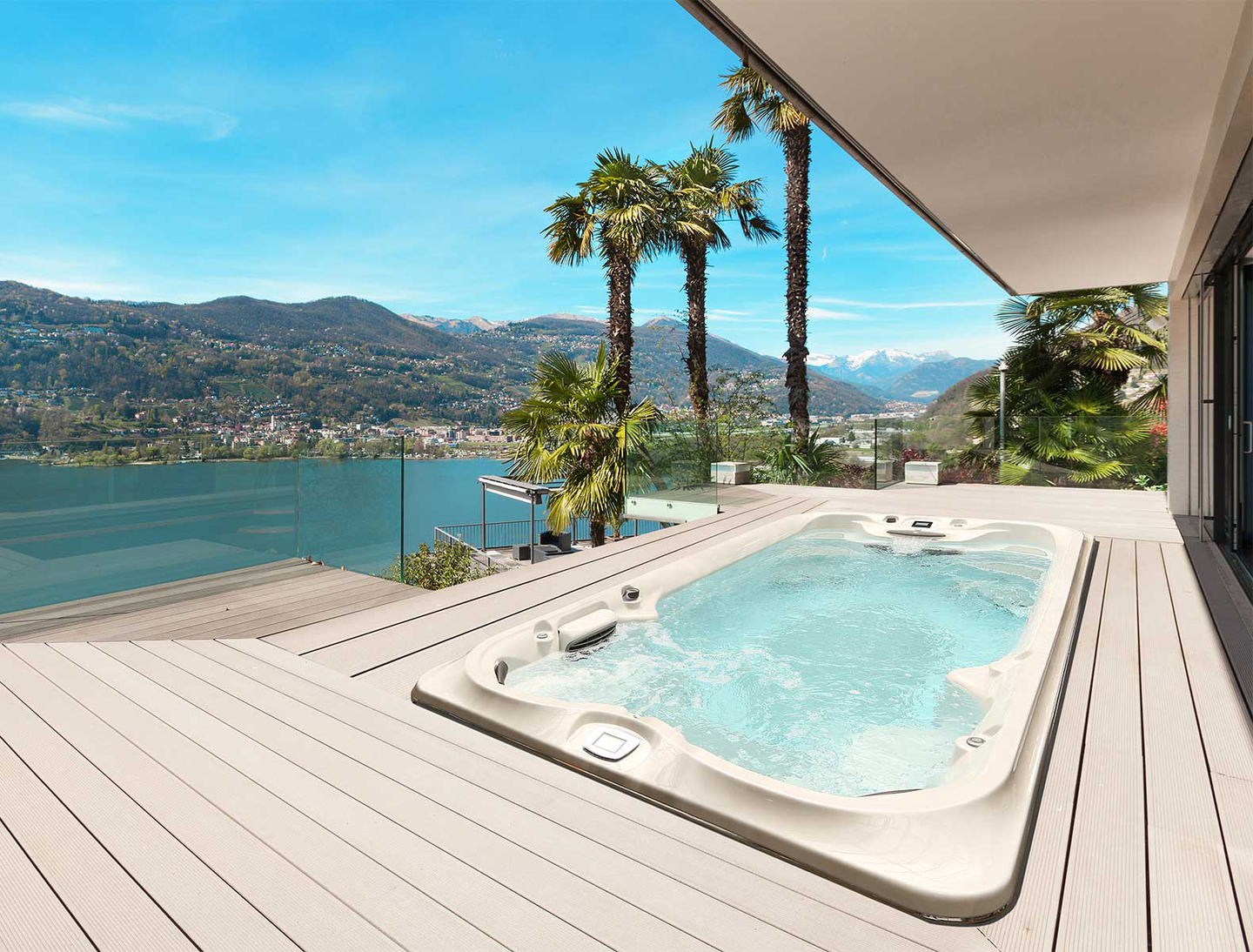
With superior performance and state-of-the-art features, a Jacuzzi swim spa is the perfect addition to your outdoor oasis, providing both fitness benefits and relaxation all year long.
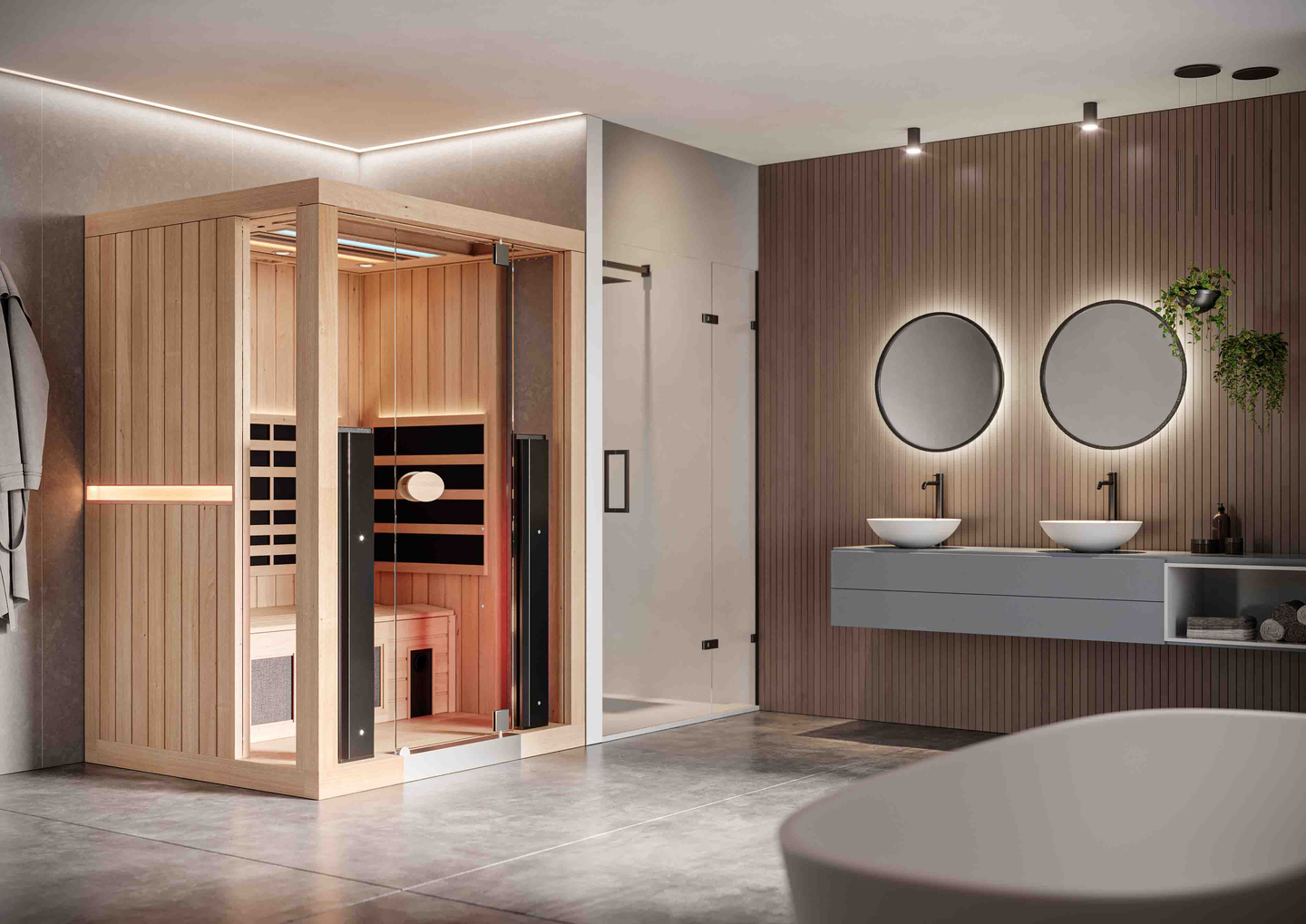
Jacuzzi® Infrared Saunas are engineered with full spectrum (near, mid and far) front-facing IR heaters, along with Red Light therapy. Enjoy a comprehensive sauna experience in a single sauna session.